
Programme Overview
Breathing easy at school: monitoring, clean cooking, green grounds and clean-air learning in Ugandan schools.
Not Enough Time In The Day? Give Us A Call
Speak to the programme team about hosting a sensor, greening a kitchen or partnering on a district strand.

School Air Quality Monitoring
Low-cost PM2.5 and PM10 sensor kits are installed at 60 schools and connected to a public dashboard. Each school receives its own baseline report, a dashboard account and a termly review, so air quality becomes a number a head teacher can act on rather than a background worry. Readings are published at school level or above only, never linked to a learner.
Kampala’s documented PM2.5 has ranged from 104 µg/m³ in early market-based studies and a citywide average of 103.6 µg/m³, to 31.4 ± 6.6 µg/m³ in continuous monitoring between January 2019 and December 2023 [AirQo; Chua et al., 2025]. All of it sits above the WHO guideline of 25 µg/m³ as a 24-hour mean [AirQo]. Reference-grade stations cost USD 50,000–250,000, which is why African networks stay sparse; kits designed for African conditions change that equation [Bainomugisha et al., 2023; AirQo].
Overview Services
The programme is delivered as six interlocking components — school air quality monitoring, clean cooking in school kitchens, green grounds and dust control, safe school runs and boda boda awareness, the clean air curriculum and eco-clubs, and policy advocacy for school air quality standards. Each component is designed so that measurement always leads to action, and action is always something the school itself can sustain after the funding ends.
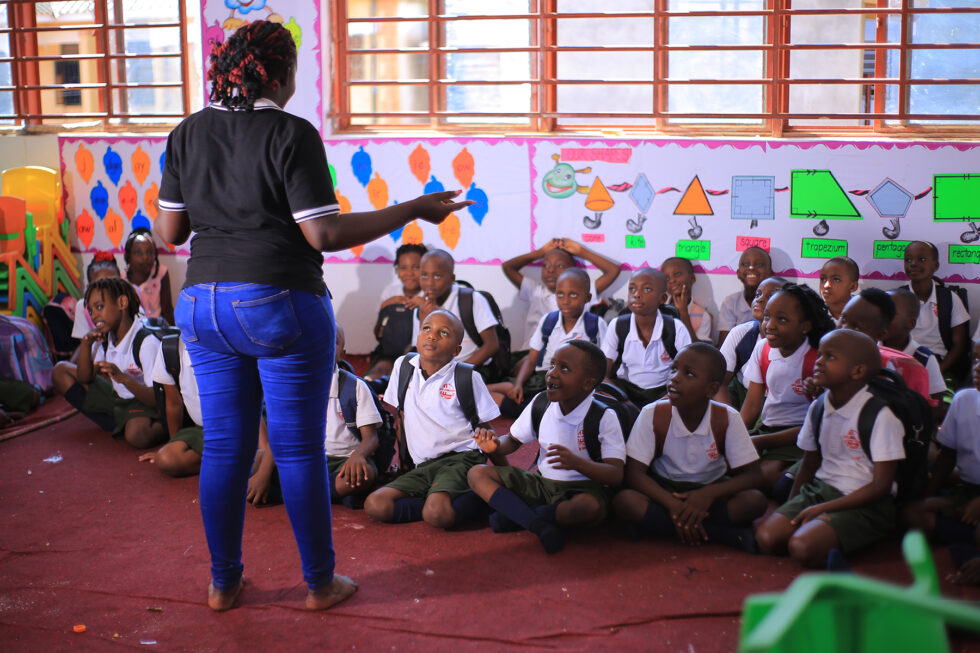
Cleaner Classrooms, Better Learning
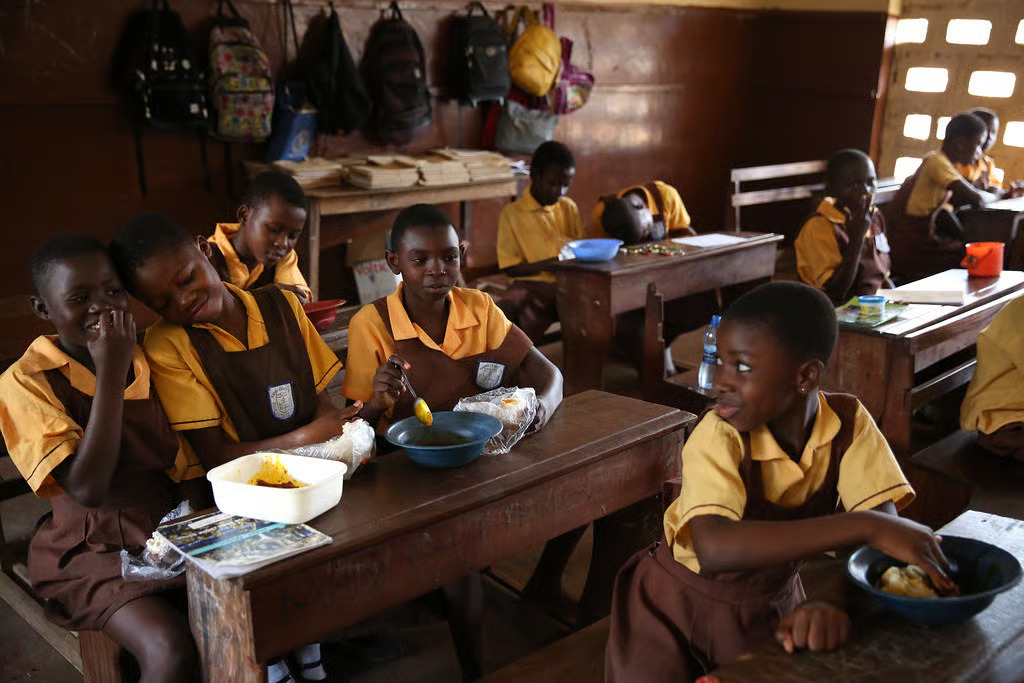
Less kitchen smoke, less ground dust and more shade mean fewer sick days, fewer coughing spells and more attention at the desk.
Measurable, School-Owned Data
Every school keeps its own dashboard account and baseline report, so air-quality action plans are written from evidence rather than assumption.
A school cannot manage what it never measures. Termly rather than hourly readings are what a school can act on: this term against last term, the kitchen corner against the football pitch, this week’s morning dust against last week’s. Sixty schools, forty kitchens, twenty thousand shade trees and one national policy ask — find out how to take part at Contact Us or call (+256) 740 017 215.